From the blog
Battery Storage vs. Grid Tie-In: Which Solar Setup Is Right for You?
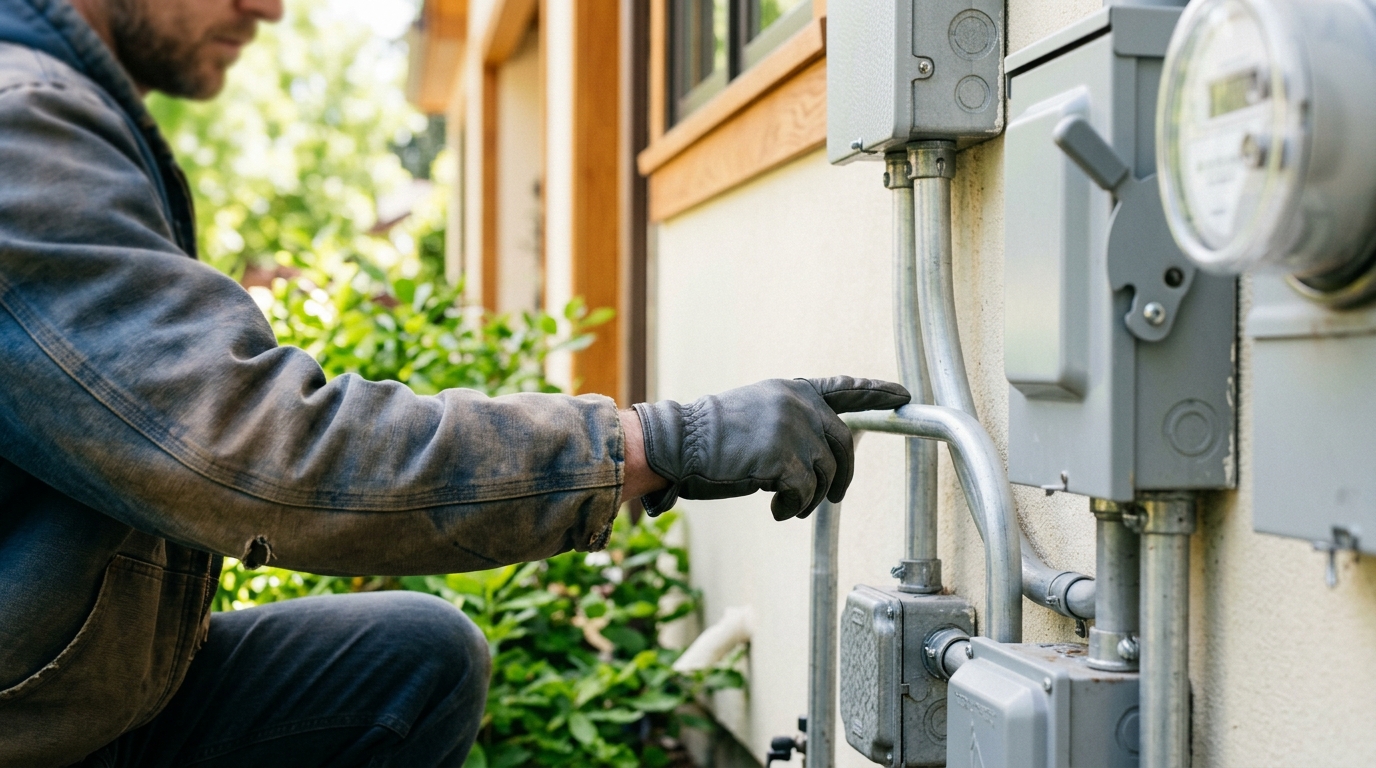
For most homeowners going solar in 2026, the defining decision isn't panel brand or inverter type - it's whether to pair your system with a battery bank or stay connected to the utility grid. Grid-tied solar is cheaper upfront and maximizes energy bill savings in areas with strong net metering policies, while battery storage gives you energy independence and backup power during outages. The right choice depends on your utility rates, outage frequency, energy goals, and budget.
This guide breaks down both options in concrete terms so you can stop second-guessing and start planning.
How Grid-Tied Solar Works
A grid-tied (or "grid-direct") solar system connects your panels directly to the utility grid through a solar inverter. When your panels produce more electricity than your home uses, the excess flows back to the grid. Your utility credits you for that export - a mechanism called net energy metering (NEM).
The critical detail: if the grid goes down, your grid-tied system automatically shuts off. This is not a bug - it's a mandatory safety feature called "anti-islanding protection" that prevents your panels from energizing lines while utility workers are making repairs. No grid, no solar power, even on a sunny day.
Grid-tied systems are the most common residential solar configuration because they carry the lowest installed cost, typically $2.50–$3.50 per watt for a standard residential system in 2026, before incentives.
How Battery Storage Works
A battery storage system - either standalone or paired with solar - stores excess electricity in lithium iron phosphate (LFP) or nickel manganese cobalt (NMC) battery packs installed at your home. During a grid outage, a critical-load panel or whole-home backup automatically switches to the battery, keeping your lights, refrigerator, and medical devices running.
The most widely deployed residential batteries today include the Tesla Powerwall 3 (13.5 kWh usable capacity, built-in inverter), the Enphase IQ Battery 5P (5 kWh per module, scalable), and the Franklin Electric aePower (13.6 kWh). A single Powerwall 3 can power an average home's essential loads for 8–12 hours depending on consumption patterns.
Battery systems add $8,000–$15,000 per battery unit to your system cost in 2026, though the federal Investment Tax Credit (ITC) - currently at 30% - applies to standalone battery storage systems sized at 3 kWh or larger, reducing that burden significantly.
Grid-Tied vs. Battery Storage: 6 Key Differences
Factor Grid-Tied Only Battery Storage (Hybrid) Upfront Cost (10 kW system) $25,000–$35,000 $38,000–$55,000+ Backup Power During Outage None Yes (essential or whole-home) Payback Period 6–9 years (typical) 9–14 years (typical) Net Metering Dependency High Low (self-consume more) Maintenance Complexity Low Moderate Ideal For Reliable grid, strong NEM rates Frequent outages, poor NEM, TOU ratesWhen Grid-Tied Solar Is the Clear Winner
Choose a grid-tied-only setup when:
- Your utility offers full retail net metering. States like Utah, Montana, and several New England utilities still credit solar exports at or near retail electricity rates. Exporting to the grid is nearly as good as storing that energy yourself.
- Your grid is reliable. If you experience fewer than two extended outages per year, the cost of a battery to cover rare inconveniences rarely pencils out.
- You want the fastest payback period. Without battery costs, a well-designed grid-tied system can return its investment in 6–8 years and generate pure savings for the remaining 17–22 years of the system's life.
- Your budget is tight. The 30% federal ITC still applies, but even after incentives, batteries add $6,000–$10,000 to your net cost.
When Battery Storage Makes Financial and Practical Sense
Battery storage is worth the premium when one or more of these conditions apply:
- Your utility uses time-of-use (TOU) pricing. Many major utilities - including PG&E in California, ConEdison in New York, and Xcel Energy - charge peak rates of $0.40–$0.55/kWh in the evening hours. Charging your battery during midday solar production and discharging it at peak avoids those high rates entirely.
- Net metering has been reduced in your state. Following California's NEM 3.0 rollout in 2023, export credits dropped by roughly 75% compared to NEM 2.0 rates. Homeowners in California now self-consume far more solar than they export, making battery storage financially competitive or superior to grid-only systems.
- You live in a wildfire, hurricane, or storm-prone area. PSPS (Public Safety Power Shutoff) events in California, hurricane-related outages in Florida and the Gulf Coast, and ice storm blackouts in Texas can last days to weeks. A two-battery setup (27 kWh) with whole-home load management can carry an average household through 24–48 hours without any solar recharge.
- You have medical equipment or a home office. Continuous positive airway pressure (CPAP) machines, oxygen concentrators, insulin refrigeration, and critical work equipment justify backup power regardless of the financial return.
- You're in a rural area with an unreliable grid. The further you are from a utility substation, the longer average outage restoration times tend to be. Rural customers in the Mountain West and Southeast report average annual outage durations 3–4 times higher than urban customers.
The Hybrid Approach: Best of Both Worlds
A hybrid solar system stays grid-connected for net metering credits and maximum savings, but adds one or more batteries for backup power and peak-shaving. This is the fastest-growing configuration in residential solar installations as of 2026, accounting for an estimated 42% of new rooftop solar deployments in the U.S., up from 28% in 2023.
Hybrid systems use a hybrid inverter (such as the SolarEdge Energy Hub or Enphase IQ8 series) that manages solar generation, battery charging, home loads, and grid interaction simultaneously. You get outage protection and utility bill optimization without going fully off-grid.
Off-Grid Solar: A Third Option Worth Mentioning
Fully off-grid systems - no utility connection at all - require massive battery banks (often 40–80 kWh or more), backup generators, and careful load management. They make sense for remote cabins, agricultural properties, and locations where a grid connection costs $20,000–$50,000+ in line extension fees. For suburban and urban homeowners, off-grid solar is neither cost-effective nor practical given current battery technology and pricing.
How to Make Your Final Decision
- Check your utility's net metering policy. Contact your utility or search your state's database at DSIRE (Database of State Incentives for Renewables & Efficiency) to confirm your export credit rate.
- Pull your 12-month electricity bill history. Look for TOU pricing, demand charges, or high peak-period rates that a battery could offset.
- Count your outages. Review the last three years. If you've had more than three outages exceeding four hours, backup power has real value to your household.
- Get itemized quotes. Ask installers to quote grid-tied and grid-tied-plus-battery separately so you can see the exact cost delta and projected savings for each scenario.
- Apply the ITC math. Both solar panels and batteries paired with solar (or standalone batteries ≥3 kWh) qualify for the 30% federal Investment Tax Credit. Run the numbers with that reduction applied.
Does a grid-tied solar system work during a power outage?
No. Grid-tied solar systems automatically shut down during utility outages due to anti-islanding safety requirements. To have power during a blackout, you need either a battery storage system or a generator paired with a transfer switch.
How many batteries do I need to power my whole home?
A typical American home consuming 30–35 kWh per day needs 2–3 batteries (27–40 kWh of usable storage) for 24 hours of whole-home backup without solar recharging. For essential loads only - refrigerator, lights, phone charging, and a few outlets - a single 13.5 kWh battery like the Tesla Powerwall 3 covers most households for 8–16 hours.
Does adding a battery increase my solar system's payback period?
Yes, typically by 3–6 years. However, in states with reduced net metering (like California under NEM 3.0) or high time-of-use rates, battery savings from peak-shaving can narrow that gap significantly. Always calculate payback with your specific utility rate structure, not a national average.
Can I add a battery to my existing grid-tied solar system?
In most cases, yes - but it depends on your current inverter. Systems using string inverters may require an inverter replacement or an AC-coupled battery (like an Enphase AC Battery), which adds cost. Systems already using microinverters or hybrid-ready inverters can integrate storage more cleanly. Get an assessment from a certified solar installer before purchasing a battery separately.
What is the lifespan of a home solar battery?
Most lithium iron phosphate (LFP) home batteries - including the Tesla Powerwall 3 and Franklin aePower - are warranted for 10 years at 70% capacity retention with unlimited cycles. Real-world data from early Powerwall deployments shows many units retaining 80%+ capacity after 8–10 years of daily cycling, suggesting functional lifespans of 12–15 years are realistic.